
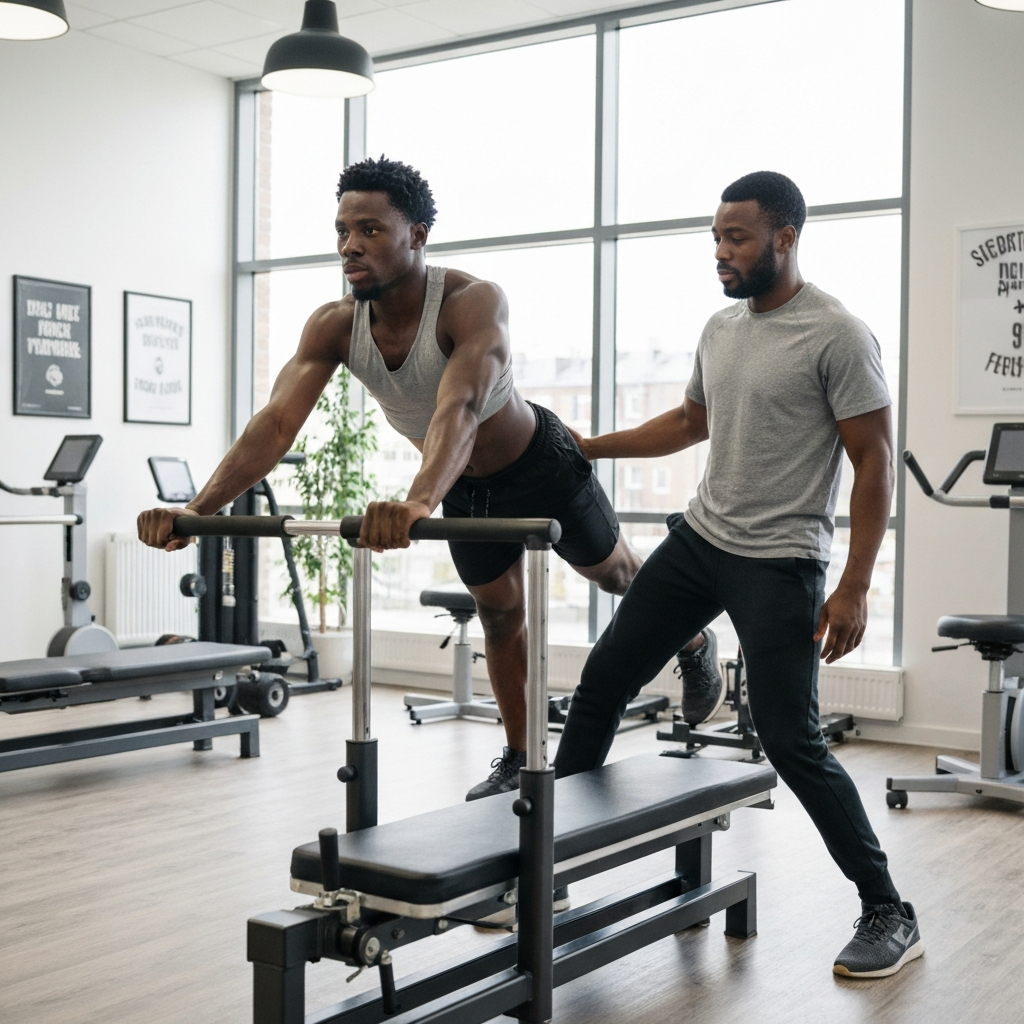
Restore Joint Stability
ACL, PCL, ankle, and shoulder ligament rehab from the acute phase through to full return to sport.
Quick AnswerWhat is Ligament Injury Rehabilitation?
ACL, PCL, ankle, and shoulder ligament rehab from the acute phase through to full return to sport.
- Evidence-based treatment
- Personalised recovery plan
- Non-surgical approach
- Expert physiotherapists
Introduction
Ligaments connect bone to bone and provide crucial joint stability. Sprains or tears (like an ACL tear or rolled ankle) require specialized rehabilitation to restore stability and proprioception.
Ligament Injury Rehabilitation is one of our specialized treatments under our Sports Injury Rehabilitation services.
Common Causes
- Sudden twisting or pivoting
- Direct impact or collision
- Awkward landings from a jump
- Hyperextension of a joint
- Uneven playing surfaces
Symptoms to Watch For
- A 'pop' felt or heard at the time of injury
- Rapid swelling and joint effusion
- A feeling of joint instability or 'giving way'
- Severe pain and inability to bear weight
- Restricted range of motion
How It Helps
Rehabilitation strengthens the muscles surrounding the joint to compensate for the damaged ligament, and retrains the nervous system (proprioception) to react quickly to prevent future instability.
Our Treatment Methods
Swelling reduction and joint mobilization
Proprioceptive and balance training (e.g., wobble boards)
Neuromuscular control exercises
Heavy slow resistance training
Plyometric and cutting drills
Who Benefits from Ligament Injury Rehabilitation?
- Individuals experiencing acute or chronic pain related to this condition
- Athletes looking to safely return to sport and improve performance
- Post-surgical patients requiring structured rehabilitation
- Office workers suffering from ergonomic or postural strain
- Seniors aiming to maintain mobility and independence
How Many Sessions Are Required?
The number of sessions varies depending on the severity and chronicity of your condition. Acute issues may resolve in 3-6 sessions, while chronic or post-surgical conditions typically require a longer, structured rehabilitation plan. Your physiotherapist will provide a clear timeline after your initial assessment.
Risks and Contraindications
- Severe osteoporosis or bone fragility (requires modified techniques)
- Active infections or unhealed open wounds in the treatment area
- Certain cardiovascular conditions (requires medical clearance)
- Acute inflammatory phases where rest is medically advised
Ligament Injury Rehabilitation vs Standard Care
While standard care often focuses merely on symptom relief through medication or rest, our specialized ligament injury rehabilitation targets the root biomechanical cause. We combine evidence-based interventions with active rehabilitation to not only eliminate pain but also prevent it from returning, ensuring a more sustainable and functional recovery.
Why Choose Us
Whether managing a sprain conservatively or rehabilitating post-reconstruction surgery, we follow strict, evidence-based protocols to ensure a safe return to high-demand sports.
Frequently Asked Questions
Do I always need surgery for a torn ligament?
No. Many ligament tears (like Grade 1 or 2 ankle sprains, or even some ACL tears depending on the patient's goals) can be successfully managed with intensive physiotherapy.
What is proprioception?
It's your body's ability to sense its position in space. Ligament injuries damage the nerves that provide this feedback. Rehab retrains this system to prevent the joint from giving way.
Conditions We Commonly Treat
As part of our Ligament Injury Rehabilitation program, we regularly treat the following related conditions:
Related Treatments
Patients seeking Ligament Injury Rehabilitation often benefit from our comprehensive approach that includes these related treatments:
Ready to start?
Book an assessment today and take the first step towards recovery.